skip to main |
skip to sidebar
1
A
rudra Darshan
Arudra Darshan is celbrated in the Tamil month of Margazhi coinciding with December – January. This day falls on the full moon night of this month when the Tiruvadirai (Arudra) star rules over. Notably, this happens to be the longest night of the year. Arudra is the star that symbolizes golden red flame, which is none else than Lord Shiva at his cosmic dance. The main highlight of this occasion is having the darshan of Shiva as Natraj, the god at his cosmic dance.
What happens during Arudra Darshan?
Arudra Darshan is a very grand event happening in the Shiva temples especially where the image of Natraj (dancing Shiva) is installed. This is a festival celebrated with great fervour and celebrity in Chidambaram, a temple dedicated solely to Natraj in Tamilnadu. It is considered highly auspicious and beneficial to view the procession of Lord Natraj on this day. All day long, there are holy baths and pujas conducted in the temples and at the end of the day, a special dish known as Kali is distributed to devotees.
Why Natraj Dances?
Lord Natraj facilitates a cosmic vision. The universe comes into existence through movement. Life goes on with the oscillation of particles. As long as there is vibration, there is life, growth and activity. Annihilation is nothing but stoppage of the movement and putting things to rest. Thus, the cycle of births and deaths goes on with the movement symbolized by the cosmic dance of Shiva. His dance occurs in every cell and every atom of the universe thus ensuring the continuity.
Importance of viewing Shiva's dance
Lord Shiva is the supreme god in Hinduism. He is the creator, preserver and destroyer of the universe. Lord Shiva dances in ecstasy to accomplish the five acts namely creation, sustenance, destruction, embodying and release. He smears ash all over his body to indicate that everything in the universe is bound to change and destruction with the passage of time. While transporting the devotees to a blissful mood, Shiva's dance also reminds them of the higher purpose of life namely moving from the transient to the eternal.
Natraj form Symbolism
Lord Natraj stands in dancing posture with one leg lifted and the other one seated on the demon signifying ignorance. Thus he indicates mastery over ego, desires and evil. He holds all the five elements in him symbolized through Damaru (ether), flowing hair (air), Flame in hand (fire), Ganges (water) and rested foot (earth). Thus, the lord is the supreme head of the universal forces and he releases them to make the worlds during creation and takes them all inside during absorption.
What we must do on Arudra Darshan?
Visiting Natraj temple on the day of Arudra Darshan to view the puja and procession of the Lord is highly auspicious and said to give all the benefits to devotees. On this day, people receive a special kind of dish as prasad namely Kali (in Tamil), which is a sweet dish indicating bliss. It is said eating this shall remove all the afflictions of people and make them blissful.

If you happen to wake up at 6 in the morning and go for a jog near Llyods Road, chances are that you’d spot Dushyanth Sridhar, wearing a panchakacham and sporting a helmet, cycling, an activity the 28-year-old is passionate about.
He’s probably on his way to a Thirupaavai upanyasam. Not to attend but deliver it. This young upanyasakar has been making waves in the city thanks to his ‘modern interpretation’ of the Vedas and the Puranas.
While his audience comprises the young and the old, his reach through mass media like the TV and the Internet primarily draws the youth. “To reach out to the younger generation, you have to address them in a language they understand,” he says. The examples he quotes are contemporary — there could be references to Salman Khan, science and Harry Potter — but the content is steeped in philosophy.
He conducts atleast 200 discourses a year and about 70 of them are lined up in the Margazhi season. “The response to my Thirupaavai discourses — which are held early in the morning — has been quite heartening,” says Dushyanth, who is well-versed in the Sri Bhashyam, Gita Bhashyam, Rahasya-traya Saram and Bhagavad Vishayam.
Dushyanth’s love for philosophy began at an early age; when he was five, he memorised the Dayasathakam which his mother was learning. “When growing up, I was very interested in elocution competitions but never did I think that I’d become an upanyasakar,” he says. “We were in Bangalore and had no connection with discourses; in fact, my mother knew very little of Sanskrit and my father had never listened to a upanyasam before.”
Things changed when he went to BITS Pilani to pursue a degree in chemical engineering. “I was asked to talk about Seetha Kalyanam; I struggled to get the Tamil words right. I thought that I did a shoddy job.”
But his dean and principal didn’t think so. They called him aside and said that it was fantastic. Soon, he was asked to deliver lectures on other topics — which meant that he had to study and research on them.
Today, Dushyanth is up most of the night; he studies the scriptures and the commentaries on them by scholars. “What I study has no connection with the upanyasam I’m to deliver the next day but I try to draw a connection,” he says. In the last few years, he has thoroughly read the Ramayana (“The text and about seven commentaries on it”) and is now busy with the Mahabharatha (“I’ve been at it for a year and a half now”). He also organises heritage yatras to Vaishnava temples across the country and is currently working on a dance ballet titled ‘Aranganin Padaiyil’ that will chronicle the 48-year-old journey of the presiding deity of Srirangam, Lord Ranganathaswamy.
Dushyanth has another side to him — and that’s a full-time job at TCS where he works as an analyst. How do his colleagues at the IT major view him? “I do not carry my religion to my workplace,” he says. “At office, I’m just another employee. Of course, I think that the questioning and reasoning that I use with my philosophical research helps me during presentations and projects.”
Some of his young colleagues are ‘fans’ and frequent his discourses. A few of them hear his upanyasams on YouTube. “I make it a point to record and upload every discourse of mine,” he says. While some call him ‘Swamy’, youngsters prefer calling him by name.
“I do not mind that; it establishes an immediate rapport.” “I do not believe in being preachy, I prefer just letting people be. Sometimes there are in the audience office-goers in their work-wear who have come to listen to my discourse after a hard day and that is very heartening.”
Like most youngsters, Dushyanth too has a desire to bring about a change in the field of education. “I firmly believe that there should be an integrated approach to teaching.”
That’s for later. For now, he’s pedalling hard to his discourses and inspiring people to do the same.
“By cycling in the morning, I get my daily dose of exercise and a breath of fresh air that keeps me going through the day.”
Listen to his talk in english on Purusha Suktam in you tube https://www.youtube.com/watch?v=-JuypqX8KC8

- composed by Sri Adi Shankaracharya
The great AdiShankara of the eighth century summarized the entirety of Advaita Vedanta (non-dualistic philosophy) in six stanzas. When a young boy of eight, while wandering in the Himalayas, seeking to find his guru, he encountered a sage who asked him, "Who are you?" The boy answered with these stanzas, which are known as "Nirvana Shatakam" or "AtmaShatakam." "Nirvana" is complete equanimity, peace, tranquility, freedom and joy. "Atma" is the True Self. The sage the boy was talking to was Swami GovindapadaAcharya, who was, indeed, the teacher he was looking for.
These few verses can be of tremendous value to progress in contemplation practices that lead to Self-Realization.
निर्वाणषटकम्
Nirvana Shatakam
Shivoham Shivoham
मनोबुद्ध्यहङ्कार चित्तानि नाहं
न च श्रोत्रजिह्वे न च घ्राणनेत्रे ।
न च व्योम भूमिर्न तेजो न वायुः
चिदानन्दरूपः शिवोऽहम् शिवोऽहम् ॥१॥
Mano-Buddhy-Ahangkaara Cittaani Naaham
Na Ca Shrotra-Jihve Na Ca Ghraanna-Netre |
Na Ca Vyoma Bhuumir-Na Tejo Na Vaayuh
Cid-Aananda-Ruupah Shivo[a-A]ham Shivo[a-A]ham ||1||
Meaning:
1.1: Neither am I the Mind, nor the Intelligence or Ego,
1.2: Neither am I the organs of Hearing (Ears), nor that of Tasting (Tongue), Smelling (Nose) or Seeing (Eyes),
1.3: Neither am I the Sky, nor the Earth, Neither the Fire nor the Air,
1.4: I am the Ever Pure Blissful Consciousness; I am Shiva, I am Shiva,
The Ever Pure Blissful Consciousness.
flowers
Shivoham
न च प्राणसंज्ञो न वै पञ्चवायुः
न वा सप्तधातुः न वा पञ्चकोशः ।
न वाक्पाणिपादं न चोपस्थपायु
चिदानन्दरूपः शिवोऽहम् शिवोऽहम् ॥२॥
Na Ca Praanna-Samjnyo Na Vai Pan.ca-Vaayuh
Na Vaa Sapta-Dhaatuh Na Vaa Pan.ca-Koshah |
Na Vaak-Paanni-Paadam Na Copastha-Paayu
Cid-Aananda-Ruupah Shivo[a-A]ham Shivo[a-A]ham ||2||
Meaning:
2.1: Neither am I the Vital Breath, nor the Five Vital Airs,
2.2: Neither am I the Seven Ingredients (of the Body), nor the Five Sheaths (of the Body),
2.3: Neither am I the organ of Speech, nor the organs for Holding ( Hand ), Movement ( Feet ) or Excretion,
2.4: I am the Ever Pure Blissful Consciousness; I am Shiva, I am Shiva,
The Ever Pure Blissful Consciousness.
flowers
Shivoham
न मे द्वेषरागौ न मे लोभमोहौ
मदो नैव मे नैव मात्सर्यभावः ।
न धर्मो न चार्थो न कामो न मोक्षः
चिदानन्दरूपः शिवोऽहम् शिवोऽहम् ॥३॥
Na Me Dvessa-Raagau Na Me Lobha-Mohau
Mado Naiva Me Naiva Maatsarya-Bhaavah |
Na Dharmo Na Ca-Artho Na Kaamo Na Mokssah
Cid-Aananda-Ruupah Shivo[a-A]ham Shivo[a-A]ham ||3||
Meaning:
3.1: Neither do I have Hatred, nor Attachment, Neither Greed nor Infatuation,
3.2: Neither do I have Pride, nor Feelings of Envy and Jealousy,
3.3 I am Not within the bounds of Dharma (Righteousness), Artha (Wealth), Kama (Desire) and Moksha (Liberation) (the four Purusarthas of life),
3.4: I am the Ever Pure Blissful Consciousness; I am Shiva, I am Shiva,
The Ever Pure Blissful Consciousness.
flowers
Shivoham
न पुण्यं न पापं न सौख्यं न दुःखं
न मन्त्रो न तीर्थं न वेदा न यज्ञाः ।
अहं भोजनं नैव भोज्यं न भोक्ता
चिदानन्दरूपः शिवोऽहम् शिवोऽहम् ॥४॥
Na Punnyam Na Paapam Na Saukhyam Na Duhkham
Na Mantro Na Tiirtham Na Vedaa Na Yajnyaah |
Aham Bhojanam Naiva Bhojyam Na Bhoktaa
Cid-Aananda-Ruupah Shivo[a-A]ham Shivo[a-A]ham ||4||
Meaning:
4.1: Neither am I bound by Merits nor Sins, neither by Worldly Joys nor by Sorrows,
4.2: Neither am I bound by Sacred Hymns nor by Sacred Places, neither by Sacred Scriptures nor by Sacrifies,
4.3: I am Neither Enjoyment (Experience), nor an object to be Enjoyed (Experienced), nor the Enjoyer (Experiencer),
4.4: I am the Ever Pure Blissful Consciousness; I am Shiva, I am Shiva,
The Ever Pure Blissful Consciousness.
flowers
Shivoham
न मृत्युर्न शङ्का न मे जातिभेदः
पिता नैव मे नैव माता न जन्मः ।
न बन्धुर्न मित्रं गुरुर्नैव शिष्यं
चिदानन्दरूपः शिवोऽहम् शिवोऽहम् ॥५॥
Na Mrtyur-Na Shangkaa Na Me Jaati-Bhedah
Pitaa Naiva Me Naiva Maataa Na Janmah |
Na Bandhurna Mitram Gurur-Na-Iva Shissyam
Cid-Aananda-Ruupah Shivo[a-A]ham Shivo[a-A]ham ||5||
Meaning:
5.1: Neither am I bound by Death and its Fear, nor by the rules of Caste and its Distinctions,
5.2: Neither do I have Father and Mother, nor do I have Birth,
5.3: Neither do I have Relations nor Friends, neither Spiritual Teacher nor Disciple,
5.4: I am the Ever Pure Blissful Consciousness; I am Shiva, I am Shiva,
The Ever Pure Blissful Consciousness.
flowers
Shivoham
अहं निर्विकल्पो निराकाररूपो
विभुत्वाच्च सर्वत्र सर्वेन्द्रियाणाम् ।
न चासङ्गतं नैव मुक्तिर्न मेयः
चिदानन्दरूपः शिवोऽहम् शिवोऽहम् ॥६॥
Aham Nirvikalpo Niraakaara-Ruupo
Vibhu-Tvaacca Sarvatra Sarve[a-I]ndriyaannaam |
Na Caa-Sanggatam Naiva Muktirna Meyah
Cid-aananda-ruupah Shivo[a-A]ham Shivo[a-A]ham ||6||
Meaning:
6.1: I am Without any Variation, and Without any Form,
6.2: I am Present Everywhere as the underlying Substratum of everything, and behind all Sense Organs,
6.3: Neither do I get Attached to anything, nor get Freed from anything,
6.4: I am the Ever Pure Blissful Consciousness; I am Shiva, I am Shiva,
The Ever Pure Blissful Consciousness.
http://www.youtube.com/watch?v=ilGtaaqv1Ik&feature=related http://www.youtube.com/watch?v=ilGtaaqv1Ik&feature=related
Listen to the enchanting Nirvana Shatakam in you tube.


By B.M.N.Murhty
The life of Acharya Shankara in its merely bodily appearance may be told briefly since it had a short span of only 32 years. But the quality and quantity of achievements that he packed into this short life have earned him a place among the world’s immortal people. Most historians have agreed that if a count were ever taken of twelve greatest men who ever lived in any country in any age, Shankara would easily be one of them. Today our minds are staggered at the thought that so much could be the achievement of a single individual within so short a time. A single person, whose only companion was his glowing spiritual and unbounded intellect and who, wandering the whole country as a Parivrajaka [wandering mendicant], conquered its mind and heart, is something unique in world history.
After establishing the Sree Sharada Peetham at Sringeri, Acharya Shankara started on a tour of Digvijaya all over the country with a view to spreading the message of Advaita Vedanta. The various places of his visit are narrated in different orders in the different Shankara Vijayas. Though the order of visit varies, they, more or less, agree on the places visited by him. In most of the places which he visited, Shankara either performed a spiritual miracle or initiated a great philosophical debate and won.
One of the places covered by the Acharya Kashmir was Kashmir. For ages, Kashmir has been the centre of worship of goddess Saraswathi [Sharada Devi]. This has been well authenticated by the famous Kashmiri poet Kalhana in his magnum opus ‘Rajatarangini’ which is a chronicle of the history of Kashmir and its rulers in Sanskrit in the form of verses. According to Kalhana, goddess Saraswathi was here seen in the form of swan in a lake near the peak of the Bheda Mountain hollowed by the river Ganga. It is said that the goddess appeared in this form of a swan to bless sage Sandilya thousands of years ago. According to history, there existed a temple for Saraswathi in the vicinity of this mountain on the banks of the river Madhumathi, a tributary to river Ganga. This temple attracted pilgrims far beyond Kashmir but in course of time it fell into disuse. In its heydays, this temple was the haunt of many sages and scholars who went there for intellectual and philosophical debates. A special seat was reserved for a scholar in this temple who would be designated as ‘Sarvajna’ and who would establish a claim for his versatility as a polyhistor. This special seat was therefore popular as a ‘Sarvajna Peetham’ which means ‘The throne of the all-wise’.
According to history, many scholars all over the country competed for the rare honour of adorning the Sarvajna Peetham but it was Acharya Shankara alone who could achieve it. The temple, as it stands today, is known as the Shankaracharya Temple and is now located in Srinagar. The temple has 64 steps, symbolizing the 64 Vidyas, known as ‘Chatusshasthi Kala’ in Sanskrit and one who has perfected all these 64 Arts of learning alone could climb up all the 64 steps and ascend to the ‘Sarvajna Peetham’. The temple is built on a high octagonal plinth which could be approached by a long row of steps. Neither the temple nor the place is called by the ancient name associated with goddess Saraswathi. Neither an idol of Goddess Saraswathi exists today.
Abul Fazl, the chronicler in the court of Akbar, notices this shrine as one dedicated to Goddess Durga, where were witnessed many miracles. In course of time, the Afridis and other tribals desecrated the temple and pulled down the structure. Substitute Sharada shrines were established in the Kashmir valley. After the establishment of the Dogra rule in Kashmir, Maharaja Gulab Singh from the Dogra dynasty who ruled Kashmir State renovated the temple and arranged for proper worship. The temple is now near the ceasefire line and is all but lost to us.
According to tradition, when the Saraswathi temple was in existence, it had a Mantap at the top with an approach by four gates from the four different directions namely, North, East. South and West. As per the Sthala Purana, these gates would open only when approached by a scholar of extraordinary merit [Sarvajna] from a region facing that particular gate. It is said that the Southern gate got opened only when Acharya Shankara on his Digvijaya Yatra approached it. Shankara got the gate opened and ascended the Sarvajna Peetham [Throne of Omniscience] after inviting Vedic scholars from all parts of India representing 72 different schools and defeating all of them in an intellectual exercise. He thus established his claim to the Sarvajna Peetham, established the supremacy of Advaita Vedanta and became a Jagadguru or World Teacher.
It is said that while ascending the 64 steps, one of the questioners [ called Prucchaka in Sanskrit] asked Shankara whether he knew the Art of Cobbling [ stitching a chappal] and gave him an awl [ stitching needle] and a piece of leather to demonstrate.
Shankara just took the awl and rubbed it against the bridge of his nose in the hot sun before putting the stitch. It may be noted that this is a typical characteristic of a cobbler who resort to this action in order to grease a blunt needle which is the only source of lubricant available in the form of sweat on the bridge of the nose. By this act of Shankara, the questioner was convinced that Shankara knew the art of cobbling.
“And still they gazed; and still the wonder grew,
That one small head could carry all he knew”
--Oliver Goldsmith in ‘Deserted Village’
B.M.N. Murthy
View The Images By Enlarging Them

Sanjay, at the end of the war went to the spot where the greatest war took place; Kurukshetra.
He looked around and wondered if the war really happened, if the ground beneath him had soaked all that blood, if the great Pandavas and Krishna stood where he stood.
“You will never know the truth about that!” said an aging soft voice.
Sanjay turned around to find an Old man in saffron robes appearing out of a column of dust.
“I know you are here to find out about the Kurukshetra war, but you cannot know about that war till you know what the real war is about.” the Old man said enigmatically.
“What do you mean?”
The Mahabharata is an Epic, a ballad, perhaps a reality, but definitely a philosophy.
The Old man smiled luring Sanjay into more questions.
“Can you tell me what the philosophy is then?” Sanjay requested.
Sure, began the Old man.
The Pandavas are nothing but your five senses,
Sight,
Smell,
Taste,
Touch and
Sound.
"And do you know what the Kauravas are?" he asked narrowing his eyes.
The Kauravas are the hundred vices that attack your senses everyday but you can fight them... and do you know how?
Sanjay shook his head again.
“When Krishna rides your chariot!”
The Old man smiled brighter and Sanjay gasped at that gem of insight.
Krishna is your inner voice, your soul, your guiding light and if you let your life in his hands you have nothing to worry.
Sanjay was stupefied but came around quickly with another question.
“Then, Why are Dronacharya and Bhishma fighting for the Kauravas, if they are vices?”
The Old man nodded, sadder for the question.
It just means that as you grow up, your perception of your elders change. The elders who you thought were perfect in your growing up years are not all that perfect. They have faults. And one day you will have to decide if they are for your good or your bad. Then you may also realize that you may have to fight them for the good. It is the hardest part of growing up and that is why the Geeta is important.
Sanjay slumped down on the ground, not because he was tired but because he could understand and was struck by the enormity of it all.
What about Karna? he whispered.
“Ah!” said the Old man. “You have saved the best for last. Karna is the brother to your senses, he is desire, he is a part of you but stands with the vices. He feels wronged and makes excuses for being with the vices as your desire does all the time.
Does your desire not give you excuses to embrace vices?”
Sanjay nodded silently. He looked at the ground, consumed with a million thoughts, trying to put everything together and then when he looked up the Old man was gone... disappeared in the column of dust...... leaving behind the great philosophy of Life!
Found it quite inspirational...
Nallinakkeswarar Temple
By S Venkataraman
While holidaying at Chennai, I came across a historic book about a Lord Siva temple at Ezhuchur, about 30km from Chennai on the Tambaram-Kanchipuram highway. I visited the temple on November 18, 2016. This temple is several thousand years old. Up until a few years ago, it remained locked, surrounded by thick bushes and dense trees. A Muslim Auto Rickshaw driver, who came with a passenger to Ezhuchur, saw the condition of the temple. He learnt that the dire situation of the temple was because of a lack of unity among villagers. He came again with his Hindu friends and RSS workers, brokered peace among villagers and united them to renovate the temple. What a wonder! The Lord played a Muslim youth to fulfill His will.
Odisi Maharishi along with his two disciples Dadhisi and Kasyapa Munivars attended Lord Siva’s wedding with Parvati/Dakshayani. The Earth was in a state of imbalance since the North, the place of Lord Siva’s wedding, was crowded by devotees and worshipers. The Lord asked Sage Agasthiyar to go South to keep the Earth in balance. Later, Agasthiyar was blessed by the Lord and his consort. While visiting various temples, Agasthiyar became immersed into the Lord at the Nallinakkeswarar temple.
Odishi Maharishi told his disciple, Kasyapa Munivar, that it was his turn to get married to the remaining 13 daughters of Daksha. King Daksha objected to this, but all 13 of his daughters decided to marry Kasyapa Munivar. The Munivar had several children through his 13 wives, including many Devas, Asuras, Garuda, Napas and Yakshas. Seeing the children fight among themselves, Kasyapa Munivar prayed to Lord Siva to bring peace. Lord Siva told Kasyapa Munivar to go to Ezhuchur and recite “Om Nama Sivaya” in quest of a solution. Kasyapa Munivar followed the Lord’s orders and brought peace among his children, who came to Ezchuru seeking darshan of the Lord. He is therefore called Nallinakkeswarar (Lord of Harmony). A happy
Kasyapa Munivar took the form of a tree, near the temple, and is believed to live in incognito even today.
There are several such Sidhha Purushas, blessed by this Lord, living in incognito within the temple trees. The 54th Peetathipathi Kanchi Sankarachariyar Sri Maha Devendra Saraswathi Swamigal was a great devotee of this Lord. He used to desert the Kanchi Matt and stay in the temple, chanting the Lord’s name. The swamigal attained Samadhi behind the temple, which is now a place of worship.
Over time, many Chola, Pandya and Pallava kings donated to this temple. Paranthaka Chola Raja decorated this temple’s tower with gold. Subsequent Muslim Bhamini Kings went on to loot the gold tower. The temple’s jewels were relocated to a safe place but the Muslim rulers beheaded the temple’s priests when they refused to divulge the whereabouts of the jewels.
On the Maha Kumbabishekam day in 2012, the temple priest and Bakthas came to the temple in the morning. When the priest opened the temple doors, everyone was taken aback to see the lingam floating in water and droplets of water still dripping on the lingam. The hypothesis that the roof was leaking was untrue. Two live cobras lay surrounding the Lingam with their hoods on. The visitors were afraid. A renowned Astrologist saw prasnam and found that mother Ganga was pouring on the Lord and two Siddha Purushas visited the Lord in the form of serpents. Slowly, the water stopped flowing, the snakes disappeared and the rituals were completed.
The most interesting mystery in the temple is two king cobras which come twice every day, drenched in water from the temple tank, to pray to the Lord. They pass over the legs of worshippers without harming them. They sit on a plate of viboothi provided by the priests. The color of the viboothi changes once the cobras sit on it. The snakes then go around the Lingam and disappear. In spite of villagers’ best efforts to track the snakes, there is no answer to where the snakes come from or go to. The viboothi encircled by the snakes is known to have a curing effect on many diseases.
A great Kaliyuga miracle is happening in this temple. Om Nama Sivaya!!
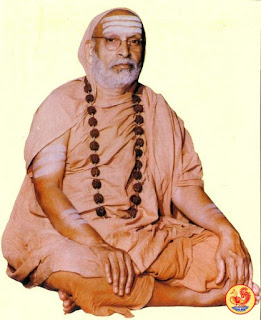
Maharishi Gautama has spoken of eight Atma Gunas (personal qualities) that everyone should cultivate. They help a man enjoy peaceand happiness and give rise to virtue. So their benefits are not confined to the present life. If people cultivate these qualities, the world will become a happier place.
1 Compassion Towards All Beings
shringeri-guru
The first such quality is "Compassion towards all beings." On account of His compassion and desire to uplift mankind God has taken many incarnations. God himself has thus shown us the way. When we have the capacity to help others, it is proper that we should also do so. The desire to relieve others of their sufferings is compassion. It occurs naturally in some persons while in some others it arises on account of the company of great ones who are very compassionate. While listing the traits in devotees that render them dear to God, in Bhagavat Gita, Krishna first mentions friendliness and compassion and absence of hatred.
In the Yoga Sutras also, compassion towards one who is suffering is enjoined to get peace of mind. Aversion, pride and the like agitate the mind. Suppose one cultivates the feeling, "I never want to be unhappy. The same is the case with others. Their suffering is on the same footing as mine. So, let none have misery." Then aversion and pride will subside and the mind will become calm. Development of compassion acts as a remedy for anger, too, and it is well-known that anger severely perturbs the mind.
2 Forbearance
The second quality is "forbearance". Normally, when one hears unpleasant news or encounters an unfavourable situation created by another, one feels angry and seeks vengeance. If one is strong enough, one directly retaliates. If not, one seeks to avenge oneself on the sly. Such behaviour does not make one noble. Though one could take action against another, he must forgive the wrong-doer without harbouring malice. Ramayana says, "Rama does not, by virtue of his self-control, recall even a single piece of wrong acts committed against him by another. On the other hand, he is happy even with a single favour done to him."
An angry person loses his mental peace. Suppose somebody is slighted by another. If he becomes angry, who is the loser? Anger is an ungrateful creature. It burns the person who gives room to it. Instead of getting angry, the slighted person could analyse whether any actual short-coming of his had been pointed out. If so, he could correct his fault and be grateful to the person who pointed it out. On the other hand, the criticism may have no basis. If so, this man could think, "It is said that making others happy is a form of worship of God. So, if this man derives joy by condemning me, then I am lucky. After all, without taking any effort, I am able to worship God by giving him some happiness. This man has done me a great favour."
3 Not Cavilling
The third quality is, "Not cavilling." Generally people who are not dexterous or successful find faults with others who are competent, prosperous or famous. The censure is basically to hide one's shortcomings. This is a bad practice, for we should appreciate good qualities in others and not assume or search for faults. In the Gita, Krishna declares his willingness to expound the Truth to Arjuna, who does not cavil. Sankara has said in his Prabodha Sudhakara, that a person who hears about the condemnation of another incurs sin. What needs be said about the sin incurred by a man who actually engages in nit-picking?
Suppose a man cultivates an attitude of friendliness towards happy people. Then he derives happiness from their success. For instance, a father is happy over the success of his son. Similarly, why will not a man feel happy if he regards another in a friendly light? It is said, “The petty minded think, 'This one is my own. that one is not'. For the broad-minded, the whole world is one family."
How can the prosperity of another agitate the mind of a person who looks upon everyone as a member of his dear family? In fact, such an attitude leads to peace of mind by eliminating jealousy that disrupts mental tranquillity.
4 Purity
The fourth quality is "Purity". If we were to encounter a person who wears filthy clothes and who has not bathed for many days, his obnoxious smell repels us. On the other hand, the stinking one is hardly aware of anything abnormal. Likewise, some are in the habit of spitting in public places. Such practices are not only repulsive, but unhygienic, too. Hence, one must bathe daily and observe hygiene. Cleanliness is an important ingredient of purity.
5 Freedom from Laziness
The fifth essential quality is, "Freedom from laziness." Many persons give excuses for not being in a position to carry out their tasks. No employer would be pleased with an indolent worker. A student who postpones studying fares badly in his examinations. When a person sincerely engages himself in the prompt performance of his duties, his mind gets far less opportunity to engage itself in idle or harmful thoughts. Thus, it is in everyone's interest to eschew laziness and cultivate zeal.
6 Auspiciousness
The sixth noble quality is, "Auspiciousness". When we meet some, we note that their words as also facial expressions are not pleasing. Such should not be the case. We should speak and conduct ourselves in a manner which is pleasant. For instance, when we meet an elderly or important person, we should politely offer a seat.
Manu has said, "Speak the truth. Utter that which is pleasant. Do not verbalise a distressing truth. Do not say anything that is gratifying but false. This is the eternal Dharma." The Lord taught Arjuna, "Speech that is true, causes no pain, is agreeable and beneficial, and the practice of studying the scriptures constitute austerity of speech."
7 Absence of Niggardliness
The seventh ordained quality is, "Absence of niggardliness." The tendency to hoard and not part with anything in charity is the result of greed. Krishna has spoken of desire, anger and greed as the triple gates of hell. Hoarding will never benefit us and when we die, we cannot take our wealth with us. Neelakanta Deekshitar humorously advised, "If you are keen that even after death you should not part with your wealth and that you should carry it with you in a bundle on your head, then give it to the deserving."
The scriptures prescribe donation to the deserving as an antidote for greed. So, charity, apart from making others happy, is conducive to the spiritual well-being of the donor. A person who loses some money feels unhappy. But he feels happy, not sad, when he voluntarily gives the same amount to a poor student who is not in a position to pay examination fees. Charity can thus make not only the receiver, but also the donor happy.
A person was advised by a holy man to gift a vegetable a day and that he would attain great merit by doing so. The poor man strictly followed the advice. After death, he was reborn in a royal family and grew up to become a king. He was able to recall what he had done in his past birth. So, he continued to gift one vegetable a day. Surprisingly, after death, he was reborn as a beggar. The man was unable to comprehend the reason and so sought the advice of the holy man who had earlier blessed him. From the sage, he learnt that prior to becoming a king he had been very poor and so a gift of a vegetable a day was sufficient to give him a lot of virtue. On the other hand, as a king he was endowed with affluence. So, thereafter, the gift of just a vegetable a day was quite insufficient to earn him merit of any consequence. The person realised that the extent of charity needed to earn a certain degree of merit depends upon one's financial status.
8 Absence of Attachment
The last of the eight qualities is, "Absence of attachment". Most of our problems are due to our worldly desires. It is said in the Panchadasi, "He who is attached gets tied down in the world. The unattached one experiences joy. Therefore, attachment should always be discarded by one who desires to be happy." It is perfectly possible to work efficiently and to fulfil all duties without attachment. In fact, attachment impairs efficient functioning. Commonly, surgeons do not perform surgeries on their close relatives. If there was no risk of attachment clouding or impairing performance such would not have been the case.
[This article appeared in a recent issue of Tattvaloka and reprinted with their permission. Tattvaloka, or the Splendour of Truth, is an international monthly publication on behalf of the Dakshnamnaya Sri Sharada Peetham, Sringeri, that highlights our ancient heritage and its contemporary relevance.
To receive a complimentary copy of a recent issue of Tattvaloka in the UK, please contact: Natarajan Sundar: nsundar100@gmail.com, or, phone (0044) 7802782659.]


